
0

SMARTLI Digital Marketing That Delivers Result

Engineering Success, Smartli

Social media marketing strategies for hair salons

Mastering Local Business Growth: A Comprehensive Guide to Sustainable Success

Published by Your Local Business Experts | Strategic Insights for Modern Entrepreneurs

In today’s rapidly evolving marketplace, local businesses face unprecedented challenges and opportunities. The intersection of digital transformation, changing consumer behaviors, and economic fluctuations demands a sophisticated approach to business growth. This comprehensive guide distills years of industry experience into actionable insights that will position your local business for sustainable success.

Whether you’re a seasoned business owner or just starting your entrepreneurial journey, understanding the fundamental pillars of growth—strategy, execution, industry dynamics, and measurable results—is essential for thriving in your local market.

1. Strategy: Building Your Foundation for Growth

Defining Your Unique Value Proposition

Every successful local business begins with a clear understanding of what makes it unique. Your value proposition isn’t just a marketing tagline—it’s the fundamental reason customers choose you over competitors. In the local business landscape, this often translates to personalized service, community involvement, specialized expertise, or convenience factors that larger competitors cannot replicate.

Market Analysis and Positioning

Strategic positioning requires a deep understanding of your local market dynamics. This involves analyzing demographic trends, identifying underserved market segments, and understanding the competitive landscape. Successful local businesses don’t try to be everything to everyone; instead, they identify specific niches where they can dominate and deliver exceptional value.

Long-term Vision vs. Short-term Tactics

A common pitfall for local businesses is becoming too reactive—constantly chasing short-term opportunities while neglecting long-term strategic planning. We recommend implementing a balanced approach: establish a three-to-five-year vision while maintaining quarterly tactical plans that align with that broader vision. This framework provides both direction and flexibility.

Customer-Centric Strategy Development

The most resilient local businesses build their strategies around deep customer understanding. This means going beyond basic demographics to understand customer motivations, pain points, and decision-making processes. Implement regular customer feedback mechanisms, conduct periodic surveys, and maintain open communication channels to ensure your strategy evolves with customer needs.

2. Execution: Turning Strategy Into Results

Operational Excellence

Strategy without execution is merely aspiration. Local businesses that consistently outperform their competitors share a common trait: operational discipline. This encompasses everything from standardized processes and quality control measures to employee training programs and customer service protocols.

Building High-Performance Teams

Your team is your most valuable asset. Execution excellence requires investing in people through comprehensive onboarding programs, ongoing training opportunities, and creating a culture of accountability and continuous improvement. Local businesses often have an advantage here—they can offer more personalized work environments and clearer paths to advancement than larger corporations.

Technology Integration

Modern execution requires leveraging technology effectively. This doesn’t mean adopting every new tool that emerges; rather, it means strategically implementing solutions that enhance efficiency, improve customer experience, and provide actionable data insights. From point-of-sale systems to customer relationship management platforms, the right technology stack can dramatically improve execution capabilities.

Agile Implementation

The business environment changes rapidly, and successful execution requires adaptability. Implement an agile approach to business operations—set clear objectives, execute in focused sprints, measure results, and iterate based on what you learn. This methodology, borrowed from software development, has proven remarkably effective for local businesses navigating uncertainty.

Resource Allocation and Prioritization

Local businesses typically operate with constrained resources, making prioritization critical. Develop clear criteria for evaluating opportunities and allocating resources. Focus on initiatives that directly support your strategic objectives and have the highest potential return on investment. Learn to say no to opportunities that, while attractive, don’t align with your core strategy.

3. Industry Insights: Understanding the Landscape

The Evolution of Local Commerce

The local business landscape has undergone dramatic transformation in recent years. The rise of e-commerce, changing consumer expectations shaped by digital experiences, and the lasting impacts of global disruptions have reshaped how local businesses must operate. Understanding these macro trends is essential for strategic planning.

Consumer Behavior Shifts

Today’s consumers exhibit paradoxical behaviors—they simultaneously value convenience and experience, seek both value and quality, and desire personalization while maintaining privacy concerns. Local businesses must navigate these tensions thoughtfully, creating offerings that address multiple consumer needs simultaneously.

The “Buy Local” Movement

There’s a growing consciousness among consumers about the importance of supporting local businesses. This presents a significant opportunity, but capitalizing on it requires more than simply being local. Businesses must actively demonstrate their community involvement, local sourcing practices, and the tangible benefits they provide to the local economy.

Digital-Physical Integration

The distinction between online and offline commerce continues to blur. Successful local businesses are creating seamless experiences that span both realms—offering online ordering with local pickup, using digital tools to enhance in-store experiences, and maintaining consistent brand presence across all touchpoints.

Emerging Opportunities

Several emerging trends present opportunities for forward-thinking local businesses: the growing demand for sustainable and ethical products, the experience economy’s emphasis on memorable interactions over transactions, and the increasing value placed on expertise and curation in an age of information overload. Position your business to capitalize on these trends before they become mainstream expectations.

4. Marketing Tools and Platforms: Your Digital Arsenal

Local SEO Fundamentals

Search engine optimization for local businesses requires a specialized approach. Google Business Profile optimization remains foundational—ensure your listing is complete, accurate, and regularly updated with posts, photos, and responses to reviews. Implement local schema markup on your website, build citations across relevant directories, and create location-specific content that addresses local search queries.

Social Media Strategy

Social media platforms offer powerful tools for local business engagement, but success requires strategic focus rather than presence on every platform. Identify where your target customers spend their time and concentrate your efforts there. For most local businesses, Facebook and Instagram remain primary platforms, while LinkedIn may be valuable for B2B-focused businesses. The key is consistent, authentic engagement rather than sporadic promotional posts.

Email Marketing

Despite the proliferation of new marketing channels, email remains one of the most effective tools for local businesses. Build your email list strategically through in-store signups, website opt-ins, and event registrations. Segment your audience to deliver relevant content, and focus on providing value rather than constant promotional messaging. Platforms like Mailchimp, Constant Contact, and Klaviyo offer sophisticated capabilities accessible to businesses of all sizes.

Reputation Management

Online reviews significantly impact local business success. Implement systematic approaches to encourage reviews from satisfied customers, respond professionally to all feedback (positive and negative), and use review insights to drive operational improvements. Tools like Podium, Birdeye, and ReviewTrackers can help manage this process across multiple platforms.

Paid Advertising

Strategic paid advertising can accelerate growth for local businesses. Google Ads with local targeting, Facebook and Instagram advertising with geographic and demographic parameters, and even traditional local media can be effective when properly executed. The key is starting with modest budgets, testing rigorously, and scaling what works while eliminating what doesn’t.

Customer Relationship Management

CRM systems have become accessible and essential for local businesses. Platforms like HubSpot, Salesforce Essentials, and industry-specific solutions help track customer interactions, automate follow-ups, and provide insights that inform marketing and operational decisions. The data captured in these systems becomes increasingly valuable over time.

Analytics and Measurement

Data-driven decision making requires proper analytics infrastructure. At minimum, implement Google Analytics on your website, use social media platform analytics, and track key metrics from your various marketing tools. More advanced businesses may benefit from dashboard solutions that consolidate data from multiple sources for comprehensive visibility.

5. Results and Benchmarks: Measuring What Matters

Key Performance Indicators for Local Businesses

Effective measurement begins with identifying the right metrics. For local businesses, we recommend focusing on a balanced scorecard that includes:

  • Financial Metrics: Revenue growth, profit margins, customer acquisition cost, customer lifetime value, and cash flow
  • Customer Metrics: Customer satisfaction scores, Net Promoter Score, retention rates, and referral rates
  • Operational Metrics: Employee productivity, inventory turnover, and service delivery times
  • Marketing Metrics: Website traffic, conversion rates, social media engagement, and email performance

Industry Benchmarks

Understanding how your performance compares to industry standards provides valuable context. While benchmarks vary significantly by industry, here are some general guidelines:

  • Customer retention rates for local businesses typically range from 60-80%, with top performers exceeding 85%
  • Email open rates for local business communications average 20-25%, with click-through rates of 2-3%
  • Google Business Profile views that convert to website visits or direction requests typically range from 3-8%
  • Social media engagement rates for local businesses often outperform national brands, with 3-6% being achievable

Setting Realistic Goals

Goal setting should balance ambition with achievability. We recommend using the SMART framework (Specific, Measurable, Achievable, Relevant, Time-bound) while building in flexibility for market conditions. Establish both leading indicators (activities that predict future success) and lagging indicators (actual results) to maintain a complete picture of performance.

Continuous Improvement Cycles

The most successful local businesses implement systematic review processes. Monthly reviews should examine operational metrics and short-term marketing performance. Quarterly reviews should assess progress toward strategic objectives and make tactical adjustments. Annual reviews should evaluate overall strategic direction and set goals for the coming year.

Attribution and ROI Analysis

Understanding which investments drive results is crucial for resource allocation. While perfect attribution is challenging, especially for businesses with both physical and digital touchpoints, implementing consistent tracking mechanisms and regularly analyzing patterns will improve decision-making over time. Don’t let perfect be the enemy of good—even approximate attribution insights are valuable.

Charting Your Path Forward

Success in local business requires the integration of strategic thinking, disciplined execution, industry awareness, effective use of marketing tools, and commitment to measurement and improvement. While the path is challenging, local businesses possess inherent advantages—agility, community connection, and the ability to provide personalized experiences—that larger competitors cannot easily replicate.

The frameworks and insights shared in this guide provide a foundation, but implementation must be tailored to your specific context, capabilities, and market conditions. Start with honest assessment of your current state, prioritize the areas with greatest potential impact, and commit to consistent progress rather than perfection.

The local businesses that will thrive in the coming years are those that embrace both the timeless principles of excellent service and community connection while adapting to the evolving expectations and technologies of the modern marketplace. Your journey toward sustainable growth begins with a single step—the commitment to strategic, intentional action.


This article represents thought leadership perspectives developed through extensive experience working with local businesses across diverse industries. For personalized guidance on implementing these strategies for your specific business, we invite you to connect with our team.

How local spas can attract more clients with digital marketing

The Complete Local Business Marketing Blueprint: Strategy, Execution, and Measurable Results

A Thought Leadership Guide for Local Business Owners Ready to Dominate Their Market

1. Strategy: Building Your Local Business Marketing Foundation

In today’s hyper-competitive local marketplace, having a product or service isn’t enough. The businesses that thrive are those with a deliberate, well-crafted marketing strategy that positions them as the obvious choice in their community.

Understanding Your Local Market Positioning

Before spending a single dollar on advertising, successful local businesses invest time in understanding their unique value proposition. Ask yourself: What makes your business the preferred choice over the competitor three blocks away? This isn’t just about price—it’s about the complete experience you deliver.

Your local marketing strategy should be built on three foundational pillars:

  • Geographic Targeting: Define your service radius and understand the demographics within it. A coffee shop in a business district requires different messaging than one near a university campus.
  • Competitive Differentiation: Identify gaps in your local market that you can fill. Perhaps competitors lack evening hours, online ordering, or personalized service.
  • Community Integration: Local businesses that embed themselves in community fabric—sponsoring little league teams, participating in chamber events, supporting local causes—build loyalty that transcends transactional relationships.

Setting Strategic Objectives

Vague goals produce vague results. Your marketing strategy needs specific, measurable objectives tied to business outcomes. Rather than “increase visibility,” commit to “generate 50 new qualified leads per month from within a 10-mile radius” or “increase repeat customer visits by 25% over the next quarter.”

The most effective local businesses align their marketing objectives with their capacity to deliver. There’s no value in driving demand you cannot fulfill—this leads to negative reviews and damaged reputation that can take years to repair.

2. Execution: Turning Strategy Into Daily Action

Strategy without execution is merely wishful thinking. The difference between local businesses that grow and those that stagnate often comes down to consistent, disciplined implementation of marketing activities.

Creating a Marketing Operations Calendar

Successful local business marketing requires rhythm and consistency. Develop a monthly marketing calendar that includes:

  • Weekly Tasks: Social media posting (3-5 times per week), responding to reviews within 24 hours, updating Google Business Profile with posts or offers
  • Monthly Tasks: Email newsletter to customer list, analysis of previous month’s metrics, content creation for upcoming campaigns
  • Quarterly Tasks: Strategy review and adjustment, competitive analysis, customer feedback surveys
  • Annual Tasks: Comprehensive marketing audit, budget allocation review, website refresh

Local SEO Implementation

For local businesses, search engine optimization isn’t optional—it’s essential. When someone searches “best [your service] near me,” you need to appear. This requires:

First, claim and fully optimize your Google Business Profile. This single action often delivers more ROI than any paid advertising for local businesses. Complete every field, add high-quality photos regularly, respond to every review (positive and negative), and post updates weekly.

Second, ensure your website includes location-specific content. Your city and neighborhood names should appear naturally in page titles, headers, and content. Create dedicated landing pages for each service area you cover.

Third, build local citations consistently. Your business name, address, and phone number (NAP) should be identical across every online directory—Yelp, Yellow Pages, industry-specific directories, and local business associations.

Content Creation That Connects

Local businesses often underestimate the power of content marketing. You don’t need to produce viral videos—you need to demonstrate expertise and build trust with potential customers in your area.

Consider creating content that addresses local needs: “How [City Name] Homeowners Can Prepare Their HVAC Systems for Summer” or “The Best Running Routes Near [Neighborhood] and What to Eat Afterward.” This type of content serves your community while naturally incorporating local search terms.

3. Industry Insights: Trends Shaping Local Business Marketing

The local business marketing landscape is evolving rapidly. Understanding these shifts allows forward-thinking business owners to gain competitive advantage while others struggle to keep pace.

The Rise of Hyper-Local Targeting

Digital advertising platforms now offer unprecedented geographic precision. You can target customers within a specific neighborhood, near a competitor’s location, or even those who have recently visited certain types of establishments. This evolution means smaller marketing budgets can achieve significant impact when deployed strategically.

Voice Search and Local Discovery

With smart speakers in millions of homes and voice assistants on every smartphone, how people search for local businesses is changing. Voice searches tend to be more conversational and question-based: “Where can I get my car detailed this afternoon?” rather than “car detailing near me.” Optimizing for these natural language queries requires content that answers specific questions your customers might ask.

The Reputation Economy

Online reviews have become the new word-of-mouth, and their influence continues to grow. Studies indicate that 87% of consumers read online reviews for local businesses, and the average consumer reads 10 reviews before feeling able to trust a business. This isn’t just about collecting positive reviews—it’s about the narrative that emerges from your review profile.

Savvy local businesses are implementing systematic approaches to review generation, encouraging satisfied customers to share their experiences while creating processes to address concerns before they become negative reviews.

The Integration Imperative

Siloed marketing channels are giving way to integrated customer experiences. Your social media presence, website, in-store experience, and customer service must tell a consistent story. Customers who discover you on Instagram, research you on Google, and visit your location should encounter a seamless brand experience throughout their journey.

Privacy Changes and First-Party Data

As third-party cookies phase out and privacy regulations tighten, local businesses that have built direct relationships with customers—through email lists, loyalty programs, and community engagement—will have significant advantages over those relying solely on advertising platforms for customer acquisition.

4. Marketing Tools and Platforms: Your Local Business Technology Stack

The right tools amplify your marketing efforts without requiring enterprise-level budgets. Here’s a curated selection of platforms that deliver exceptional value for local businesses.

Essential Platforms

Google Business Profile (Free): Your most important digital asset. This free platform determines how you appear in Google Maps and local search results. Treat it as your second website.

Meta Business Suite (Free): Manage your Facebook and Instagram presence from a single dashboard. Schedule posts, respond to messages, and access insights about your audience.

Mailchimp or Constant Contact ($0-$300/month): Email marketing remains one of the highest-ROI channels for local businesses. These platforms make it accessible for non-technical users while providing automation capabilities.

Customer Relationship Management

HubSpot CRM (Free tier available): Track customer interactions, manage your sales pipeline, and understand your customer journey. The free version offers substantial functionality for growing local businesses.

Jobber or ServiceTitan (varies by business size): For service-based businesses, industry-specific CRM platforms can streamline scheduling, invoicing, and customer communication.

Reputation Management

Birdeye or Podium ($200-$500/month): Automate review requests, monitor mentions across platforms, and respond to reviews from a central dashboard. These tools can dramatically increase your review volume and improve response time.

Local Advertising Platforms

Google Ads (Pay-per-click): Capture high-intent local searchers actively looking for your services. Local Services Ads, in particular, offer pay-per-lead pricing for eligible service categories.

Meta Ads (Pay-per-impression or click): Build awareness and reach customers based on demographics, interests, and behaviors within your service area.

Nextdoor Business (Free and paid options): Access the neighborhood-focused social network where local recommendations carry significant weight.

Analytics and Insights

Google Analytics (Free): Understand how visitors find and interact with your website. Essential for measuring the effectiveness of your digital marketing efforts.

CallRail or similar ($45-$145/month): Track phone calls generated by specific marketing campaigns. For businesses where phone calls drive revenue, this visibility is invaluable.

Content Creation

Canva (Free tier available): Create professional-quality graphics, social media posts, and marketing materials without design expertise.

Later or Buffer ($0-$100/month): Schedule social media content in advance, maintaining consistent presence without daily time investment.

5. Results and Benchmarks: Measuring What Matters

Marketing without measurement is gambling. Establishing clear benchmarks and tracking performance allows you to double down on what works and eliminate waste.

Key Performance Indicators for Local Businesses

Not all metrics deserve equal attention. Focus on KPIs that directly correlate with business outcomes:

Metric Good Performance Excellent Performance
Google Business Profile Views (monthly) 1,000-5,000 5,000+
Website Conversion Rate 2-5% 5-10%
Email Open Rate 15-25% 25-40%
Review Response Rate 90% 100%
Average Star Rating 4.0-4.5 4.5-5.0
Customer Acquisition Cost Varies by industry Below industry average
Customer Lifetime Value 3x acquisition cost 5x+ acquisition cost

Industry-Specific Benchmarks

Restaurants and Food Service: Expect 60-70% of new customers to discover you through Google or Maps. Email marketing should drive 15-20% of revenue from repeat customers. Social media engagement rates of 3-6% indicate healthy community connection.

Home Services: Lead conversion rates of 20-30% from phone inquiries represent strong performance. Cost per lead typically ranges from $50-$150 depending on service type. Referral programs should generate 20-30% of new business.

Retail: Email marketing should contribute 20-30% of revenue. Social media followers should convert at 1-2% when presented with offers. Loyalty program members should demonstrate 2-3x higher lifetime value than non-members.

Professional Services: Website conversion rates of 3-5% for consultation requests indicate effective positioning. LinkedIn typically outperforms other social platforms for B2B-oriented local services. Client retention rates above 80% signal strong service delivery.

Calculating Marketing ROI

The ultimate benchmark is return on investment. Calculate this by tracking:

  1. Total marketing spend (including tool subscriptions, advertising, and time investment valued at hourly rate)
  2. Revenue attributed to marketing efforts (new customers, increased transaction values, retained customers who might have churned)
  3. ROI = (Revenue – Marketing Spend) / Marketing Spend × 100

Local businesses should aim for minimum 3:1 return on marketing investment, meaning every dollar spent generates three dollars in revenue. Well-optimized campaigns often achieve 5:1 or higher.

Building a Performance Dashboard

Create a monthly marketing dashboard that tracks your most important metrics in one view. This could be as simple as a spreadsheet or as sophisticated as a tool like Databox or Google Data Studio. The key is consistent tracking that allows you to identify trends over time.

Review this dashboard monthly with your team. Celebrate wins, investigate declines, and make data-informed decisions about where to allocate resources in the coming period.

Moving Forward: Your Local Marketing Action Plan

The businesses that will thrive in the coming years are those that treat marketing not as an expense but as an investment in sustainable growth. They understand that consistent effort compounds over time—the Google reviews you collect this month, the email list you build this quarter, and the community relationships you nurture this year all contribute to a marketing asset that appreciates in value.

Start where you are. If you haven’t claimed your Google Business Profile, do that today. If you’re not collecting customer emails, implement a system this week. If you’re not responding to reviews, make it a daily habit starting now.

Local business marketing success isn’t about doing everything—it’s about doing the right things consistently. Choose two or three initiatives from this guide that align with your current capacity, execute them excellently, and build from there.

The local businesses that will dominate their markets in the years ahead are taking action today. The question is: will you be one of them?

This guide represents current best practices in local business marketing. Markets and platforms evolve continuously—commit to ongoing learning and adaptation as the landscape shifts.

After working with hundreds of non-profits on digital fundraising, here are the patterns worth paying attention to:

After working with hundreds of non-profits on digital fundraising, here are the patterns worth paying attention to:

1. Brand story and media strategy work best when built together. The strongest campaigns happen when storytelling and channel strategy inform each other from the start. Creating space for both disciplines to collaborate early makes a meaningful difference in outcomes.

2. Digital infrastructure is one of the highest-leverage investments an NFP can make. Organizations that build owned systems — CRM, data pipelines, attribution — consistently see better budget efficiency over time. Every dollar works harder when you’re not starting from scratch each campaign.

3. The channel mix has expanded in meaningful ways. Beyond social, SEM, and programmatic, digital audio, streaming, and SMS have proven surprisingly precise for reaching the right donor audiences. There’s still a first-mover advantage for organizations willing to test.

4. Creative has a shorter shelf life than ever. The story still needs to land emotionally — but attention windows have shrunk. Great creative strategy accounts for both depth and adaptability.

5. Data integrity and the “so what” problem. How often do we question whether our marketing data is accurate — and even when it is, how often do we fail to translate it into a decision? Both gaps are worth addressing head on.

6. Audience mapping is underanalyzed. Why is someone in Edmonton donating to a research foundation in Arizona? Personal connection? School Alumni? Travel experience? Family history? Understanding that — and whether it’s replicable — changes everything about targeting.

7. Sequential fundraising needs an ecosystem, not silos. First-time ask, monthly giving, events, legacy gifts, corporate partnerships — the organizations connecting these touchpoints consistently outperform those managing them independently. And fundraising leadership plays a central role in making that ecosystem function.

8. The Google Ad Grant is $10,000 USD/month in free advertising — and most NFPs aren’t fully using it. It comes with requirements that can be tricky to navigate, but organizations that get it right unlock a significant recurring channel for donor acquisition at no media cost.

9. The numbers speak for themselves. When digital fundraising is executed with the right strategy and infrastructure, we consistently see year-over-year returns on ad spend above 200%. It’s not out of reach — it’s a function of getting the fundamentals right.

10. Digital fundraising is ultimately a leadership conversation. In a world where donors, volunteers, and stakeholders all live online, the organizations seeing the strongest results are those where senior leadership is actively engaged in digital strategy — not just delegating it. When decision-makers understand and champion the digital ecosystem, everything else performs better.

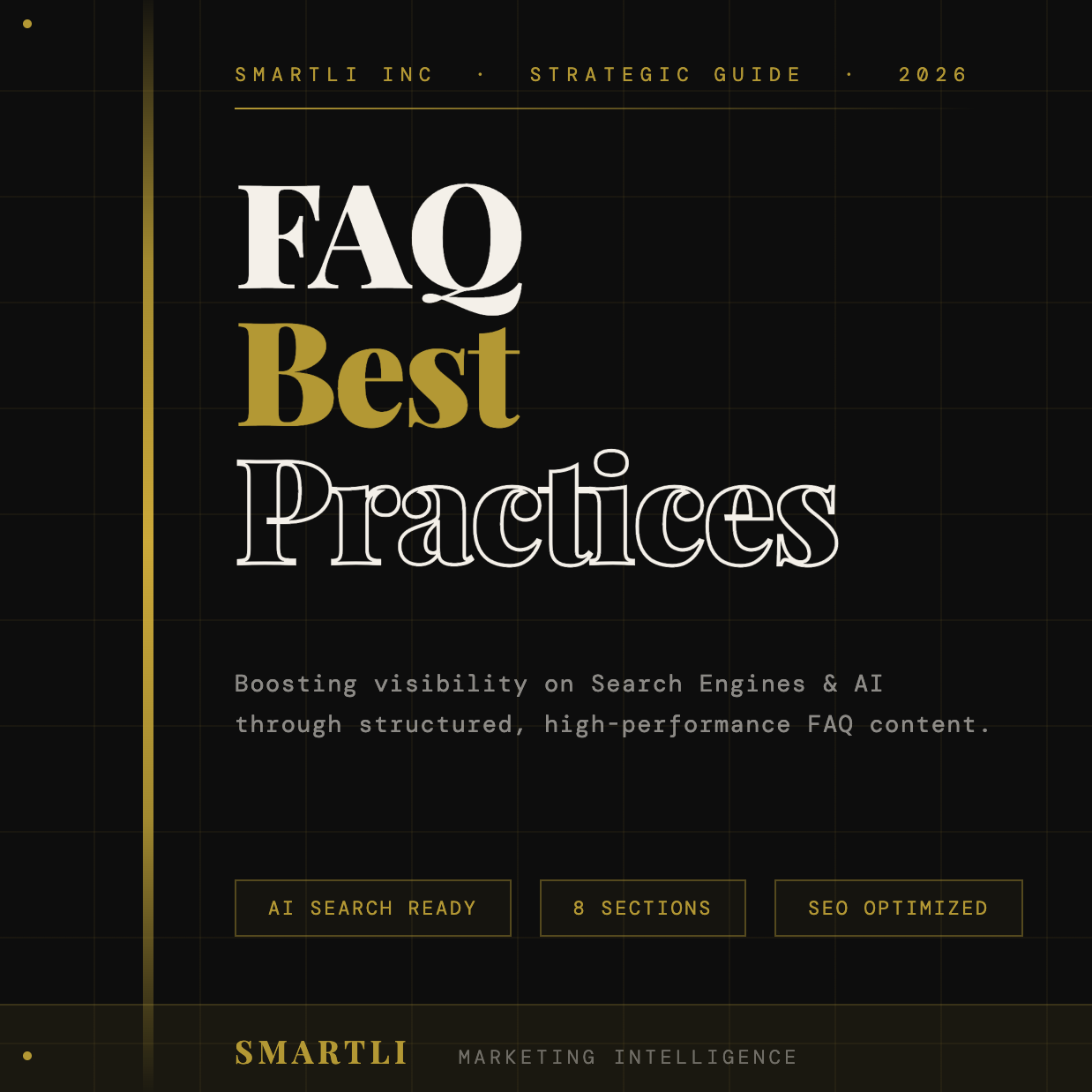
FAQ Best Practices -A Strategic Guide to Boosting Visibility on Search Engines & AI

1. Why FAQs Matter for AI & Search Visibility

As AI-powered search (Google AI Overviews, ChatGPT, Perplexity, Claude) becomes the primary way users discover information, FAQ content has become one of the most powerful tools for digital visibility. Here’s why:

  • AI systems are trained to match question-answer patterns — FAQs are structurally aligned with how people query AI.
  • FAQ schema markup signals content explicitly to search crawlers and AI indexers.
  • Well-structured FAQs are heavily favored for Featured Snippets and AI-generated answer cards.
  • FAQs increase topical authority — a deep FAQ library signals expertise and comprehensiveness to both humans and algorithms.
  • Conversational queries are growing — over 50% of searches are now phrased as questions; FAQs directly target this behavior.

Key Insight AI systems don’t just crawl pages — they look for content that directly answers questions in a clean, self-contained format. FAQ content is optimally structured for this.

2. Multiple Small FAQs vs. One Long FAQ Page

The traditional single FAQ page is outdated. A distributed, contextual FAQ strategy consistently outperforms.

Why Multiple Small FAQs Win

  • Each FAQ cluster can rank independently for different query types.
  • A FAQ embedded on a product page is far more useful — and better ranked — than a generic FAQ buried in the nav.
  • Users find answers faster, reducing bounce rates, which positively impacts search rankings.
  • Small, focused FAQs are quick to update and less likely to become stale.
  • Distributed FAQs mean the brand gets cited across many different query contexts, not just one.

Where to Place Small FAQ Clusters

Page TypeFAQ Purpose
Product / Service PagesAddress purchase objections and feature questions
Blog Posts & ArticlesAnswer follow-up questions naturally raised by the content
Pricing PagesBuild trust and clarify value — reduce cart abandonment
Location / Contact PagesAnswer practical ‘how do I’ and logistics questions
Category PagesCover broad topic questions to capture top-of-funnel queries
Support / Help CenterAddress how-to and troubleshooting questions post-purchase

Rule of Thumb Aim for 5–7 highly relevant FAQs per page rather than 30 generic ones. Quality and contextual fit beat volume every time.

3. Getting Cited by AI Systems

Being cited by AI tools (ChatGPT, Perplexity, Google AI Overviews, Claude) requires more than just having good content — it requires being a trusted, frequently-referenced source across the web.

Content Requirements for AI Citation

  • Each FAQ answer should make sense without any other context on the page. Write answers as standalone responses.
  • Avoid jargon-first phrasing. Use natural language that mirrors how users ask questions.
  • 40–80 words is the sweet spot for AI pull-through. Keep answers concise but complete.
  • AI systems favor answers that front-load the key information. Lead with the direct answer.
  • Use specific, factual language. Vague answers are less likely to be surfaced by AI.

Technical Requirements for AI Citation

  • FAQ Schema (JSON-LD): Explicitly signals your Q&A structure to Google and AI crawlers.
  • Clean HTML structure: Use proper heading hierarchy (H2 for questions, paragraph for answers).
  • Fast page load speed: AI crawlers deprioritize slow pages. Target under 2 seconds.
  • Mobile-friendly layout: Most AI indexing happens via mobile-first crawling.
  • Canonical URLs: Prevent duplicate content confusion when FAQs appear on multiple pages.

Off-Page Signals That Drive AI Citation

  • External citations: Getting your FAQ content linked to or mentioned by authoritative third-party sites dramatically increases AI citation probability.
  • Brand mentions in forums & communities: Reddit, Quora, and industry forums are heavily indexed by AI systems. Appearing in these conversations reinforces authority.
  • Consistent brand name references: The more your brand is mentioned in authoritative contexts, the more AI systems treat it as a trusted source.
  • Press coverage and partnerships: Earned media from credible outlets amplifies citation worthiness significantly.

Citation Strategy Think of AI citation like a trust signal. It’s not just about having the right page — it’s about being a brand that is consistently referenced, linked to, and discussed across credible sources online.

4. Writing High-Performance FAQs

The quality of the writing itself is as important as the structure. Follow these guidelines:

Question Formulation

  • Use the exact language your customers use.
  • Cover the full funnel: awareness questions (‘What is X?’), comparison questions (‘X vs Y?’), and decision questions (‘Is X right for me?’).
  • Include negative and objection questions (‘What are the limitations of X?’) — these build trust and rank well.
  • Think in voice search terms. Questions that start with Who, What, When, Where, Why, How perform best.

Answer Formulation

  • Open with a direct, one-sentence answer. This is what gets pulled into AI summaries.
  • Follow with 2–3 sentences of supporting detail or context.
  • End with a natural next step or link when relevant. Don’t leave users stranded.
  • Avoid filler phrases (‘Great question!’, ‘It depends…’) — these dilute answer quality for AI indexing.

5. FAQ Maintenance Frequency

FAQs are not a ‘set it and forget it’ asset. Stale FAQs can actively harm credibility with both users and AI systems.

FAQ TypeRecommended Frequency
High-Traffic / High-Intent PagesMonthly — pricing, product, and conversion pages change frequently
Blog & Content FAQsQuarterly — review for accuracy and add newly emerging questions
Industry / Topic FAQsBi-annually — align with industry trends and terminology shifts
Support / Help Center FAQsMonthly — driven by ticket volume spikes and product updates
Full FAQ AuditAnnually — remove outdated entries, merge duplicates, reassess keyword targeting

Triggers for Immediate Updates

  • Product launch, pricing change, or service update
  • Surge in customer support tickets around a specific topic
  • Google algorithm update or major shift in search rankings
  • New competitor entering the market with different positioning
  • Policy, legal, or compliance changes affecting your industry

Maintenance Tip Assign FAQ ownership to a specific team member and set calendar reminders. Treat FAQs like living documentation — not static copy.

6. Technical Implementation Checklist

Before publishing any FAQ, run through this technical checklist:

  • FAQ Schema (JSON-LD) added to page <head>
  • Questions formatted as H2 or H3 headings
  • Answers in standard paragraph tags (not hidden behind accordions without indexable text)
  • Page load speed under 2 seconds
  • Mobile rendering tested and verified
  • Internal links from FAQ answers to relevant deeper content
  • Canonical tag set correctly
  • FAQ appears in Google Search Console after indexing

7. Common Mistakes to Avoid

Common MistakeBest Practice Fix
One massive FAQ pageDistribute into contextual clusters per page type
Answers written for marketing, not usersUse plain language that mirrors how users actually ask
FAQ content hidden in JavaScript accordionsEnsure all text is indexable in the HTML source
No schema markupAlways implement FAQ JSON-LD structured data
Duplicating FAQs without canonical tagsUse canonical tags when the same FAQ appears on multiple pages
Ignoring emerging questionsMonitor support tickets and search queries monthly for new FAQ gaps
Generic, vague answersEvery answer should be specific, factual, and self-contained
No update cadenceAssign ownership and set recurring review reminders

8. Measuring FAQ Performance

Track the following metrics to assess FAQ impact:

  • Organic traffic to FAQ-enabled pages: Monitor month-over-month in Google Analytics.
  • Featured Snippet appearances: Track via Google Search Console impressions for question-format queries.
  • AI citation rate: Manually test key queries in ChatGPT, Perplexity, and Google AI Overviews monthly.
  • Page engagement metrics: Time on page and scroll depth indicate whether FAQs are being read.
  • Conversion rate on FAQ-enhanced pages: Strong FAQs should reduce friction and improve conversion.