
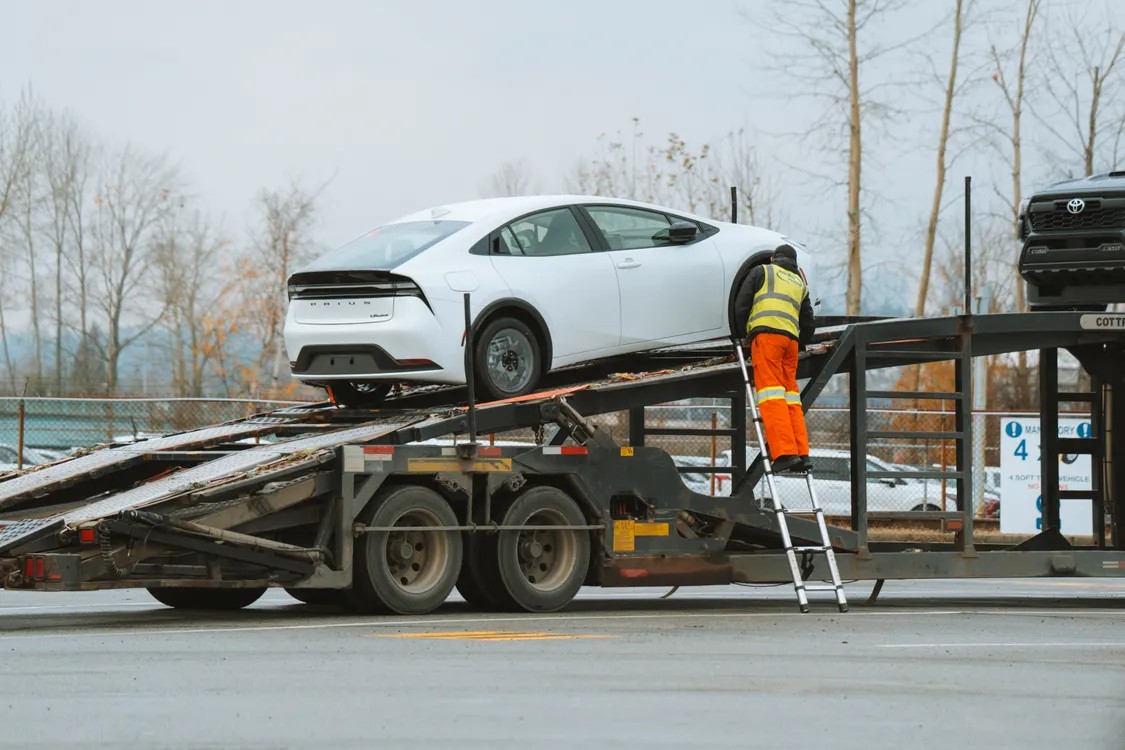
This is a marketing piece, written from the marketing side. Smartli does not run trucks, and this article does not pretend to. What follows is what the published guides, the FMCSA records, and the market numbers actually show, and what those patterns mean for how a transport company spends its marketing money.
The first thing the numbers show is how big and how fragmented this market is. That changes the whole picture.
1. A market of thousands of small companies, not a few big ones
Auto transport in the United States is not a handful of large carriers. It is thousands of mostly small ones.
A September 2026 copy of the FMCSA Motor Carrier Census holds 5,830 active carriers that declare motor vehicles as cargo, 5,173 of them with at least one truck or driver. Brokers, who own no trucks, are registered separately and are not in that count. IBISWorld counts 6,586 businesses in US vehicle shipping services, in a market valued at $10.5 billion a year.
And most of those companies are small. About 97% of carriers run fewer than 20 trucks, and about 53% are single-truck operators. The big carrier with 90 trucks is the exception. The typical reader of an article like this runs a handful of trucks, or books loads as a broker, and the marketing advice has to work at that size.
That matters because a lot of transport marketing writing pictures one large carrier with a dispatch team and a national brand. Most of the market does not look like that. A small carrier cannot staff a 24-hour sales desk, and a two-person brokerage cannot build the tracking stack a national brand runs. The plan has to fit the company that actually has to run it.
2. Carrier, broker, and tow truck are three different businesses
Auto transport covers more than carriers and brokers. Tow trucks are a third business in the same world, and they market completely differently.
A carrier owns trucks and employs the drivers who move the vehicle. A broker owns no trucks. It books the shipment and matches it with a licensed carrier running that route. In the United States, both have to register with the Federal Motor Carrier Safety Administration (FMCSA), and a broker also has to hold a $75,000 surety bond or trust fund. Anyone can check a broker or carrier’s USDOT and MC numbers in the FMCSA’s public SAFER database before booking.
A tow truck company is different again. The US Census counted 10,566 motor vehicle towing establishments in 2023, averaging 6.9 employees each. Towing is local and urgent: breakdowns, accidents, roadside assistance, police and insurance contracts, storage lots. A tow customer is not comparing quotes for a cross-country shipment. They need a truck now, nearby, and a phone that gets answered. Marketing for towing is local search, a current Google Business Profile, and the motor-club and insurer relationships that send the calls. A quote funnel built for long-distance shipping does not fit it.
3. Trust is the product
Vehicle shipping is a trust sale before it is a price sale. Nobody hands over a car to a company they do not believe will deliver it in one piece, on time, and answer the phone if something goes wrong.
That is why the marketing landscape starts before the ad click: reviews, ratings, and what past customers actually say. A company with a thin review profile, slow replies to complaints, or no clear answer on insurance and damage claims will pay more for every lead, because every prospect has to be talked into trusting it from zero.
The practical pieces are not glamorous, and they are not media. They are a Google Business Profile that is current and answered, reviews asked for after every delivery, a plain-language page on how insurance and claims work, and a real phone number that gets picked up. A broker’s vetting process belongs on the site too: how it checks a carrier’s authority and insurance, and what happens if a truck is late. We handle everything is not an answer. What gets checked is the answer.
Trust can be measured: review volume and rating by lane, response time to reviews and complaints, and how many quote requests mention a review or a referral. When those numbers are weak, more ad spend just buys more people a reason to say no.
4. Who buys more than once matters more than who clicks once
Not all customers are worth the same, and a lead count hides that completely.
A family shipping one car across the country is a one-off sale. A dealer moving ten units a month from an auction, a manufacturer relocating fleet vehicles, and a relocation company sending cars every week are repeat revenue. Snowbirds ship twice a year, every year. One dealer account can be worth more than a hundred one-off consumer leads, and it costs far less to keep than to replace.
So the marketing plan has to split. Consumer marketing is quote-led, fast, and price-sensitive. B2B marketing is relationship-led: a named contact, a rate card by lane, a service-level promise, and follow-up after every shipment. The website, the sales follow-up, and the reporting all look different for the two, and they should not share a funnel.
The difference shows up in the numbers for each segment: how much revenue it brings in, how often it repeats, and what it costs to win. Without those numbers, an ad account is optimising blind, no matter how good the cost per lead looks.
5. The quote is the product, so build the funnel around it
Most buyers don’t buy vehicle shipping straight from an ad. They request a quote, compare it, and then decide. So the quote request is the conversion that matters, and the form is where most auto transport campaigns quietly fail.
A form that asks too little produces leads nobody can price: no pickup and delivery postal codes, no vehicle year, make and model, no first available date, no answer to whether the car runs, no open versus enclosed choice. A dispatcher then has to call to collect the basics, and every extra call is a chance to lose the shipment to a competitor who quoted first.
A form that asks too much produces nothing at all. The fields that earn their place are the ones a carrier needs to price the load: pickup and delivery locations, vehicle details, whether it runs, first available date, and transport type. Everything else, how they heard about the company, comments, a second phone number, can wait until after the quote.
Two traps to avoid:
- The low-ball quote. Quotes are predictions of what a carrier will accept, not a fixed menu. Prices move with fuel, season, and lane demand. A quote priced far below the market usually means the car sits unassigned while the broker waits for a carrier to accept it. The cheapest quote on the page is often the most expensive shipment, measured in days lost.
- The slow reply. Bought leads are resold fast and dialled within minutes. An owned lead that waits hours for a callback is not much better off. Speed to contact is part of the funnel, not an afterthought. If nobody can call within minutes, the form should say so honestly instead of promising an instant quote it cannot deliver.
Check the figures on the day of acting. The lead prices and close rates below are vendor-published figures from 2026 guides, not Smartli’s own account data. They help with planning. They are not guarantees. Check Google’s own requirements and FMCSA rules directly before building around them.
6. Paid media and bought leads are one channel, and an important one
Bought leads come from quote-comparison sites. One submission is resold in real time to multiple brokerages, up to 10 at the published shared rates. Vendor-published 2026 prices run roughly $1.00 to $2.75 per shared lead, $14 to $20 for an exclusive lead, and around $20 to $25 for a live call transfer. Vendor-published close rates run roughly 5 to 9% on shared leads and 20 to 40% on exclusive leads. Those are the vendors’ own figures, so treat them as the optimistic end of the range. The pattern still holds: shared leads are cheap and mostly do not book; exclusive leads cost about ten times more and book far more often.
An owned pipeline, ads on a company’s own account, under its own brand, produces leads that are exclusive by definition. Nobody else gets the same submission. The cost is higher per lead and the build is slower. It needs tracking that ties every quote, booking, and dispatched load back to the click that produced it, and offline conversion data flowing back to Google so bidding can aim at booked shipments rather than form fills. Google’s published requirement for value-based bidding on Search is at least 15 conversions in the past 30 days. That is why this build suits businesses with real volume rather than a two-person desk.
Lane-based campaigns are how this works in practice: separate ad groups for the lanes that actually make money, with keywords, ads, and landing pages that name the lane. Toronto to Vancouver car shipping and Montreal to Calgary vehicle transport, instead of one national campaign bidding on car shipping and sending everyone to the same generic page. A landing page that names the route, the typical transit time, and the open or enclosed choice for that route will out-convert a homepage every time, and it tells Google exactly what the searcher wanted. Geo-targeting follows the same logic: a carrier based in Ontario with trucks running the Quebec, Ontario and Western Canada corridors should not be paying for clicks from places it cannot pick up from.
The number that settles the argument is cost per booked order, not cost per lead. As one auto transport ads guide puts it: a $6 lead that never books costs more than a $12 lead that does. Ten $6 leads that book nothing cost $60 and return nothing; ten $12 leads that book one shipment cost $120 and return a shipment. Judge every source, bought or owned, Google or Meta, on booked orders, and re-check the answer monthly, because lane demand and seasonality move it.
But it is one part of the strategy, not the whole plan. Paid media and bought leads matter, and they work — and they work best alongside the rest. If bought leads and paid search stopped tomorrow, what would still bring in business? Reviews, repeat dealer accounts, referrals, and organic search for the lanes a company owns. If the answer is nothing, the business is renting its demand, not building it.
7. The job after the booking decides the next booking
Marketing does not stop when the quote becomes a booking. In auto transport, what happens after the booking is what decides whether that customer ever comes back, leaves a review, or refers someone.
A customer who gets a clear pickup window, a call when the truck is on its way, and an honest update when it is late will forgive a lot. A customer who hears nothing until delivery day will not book again, and will say so in a review. Dispatch communication, tracking, delivery confirmation, and how damage claims are handled are marketing work, even though no marketer runs them. They are the reason the next lead costs less.
This is where the review rate, the repeat rate, and the referral rate come from: how fast dispatch confirms, what the customer is told and when, and what happens when a shipment goes wrong. Fix those, and the ad account gets cheaper. Ignore them, and no amount of media fixes the leak.
8. Drivers are a second market, not a second campaign
Almost every growing carrier has two funnels, and mixing them is one of the most common and most expensive mistakes in this industry: shipper ads and driver recruitment ads in the same campaigns, on the same landing pages, aimed at the same conversion.
They are different buyers with different questions. A shipper wants a price, a date, and proof the car is safe. A driver wants pay, route, home time, and what licence is required. In Canada right now, drivers have the upper hand. Trucking HR Canada’s labour market data puts the industry at roughly 23,000 to 25,000 unfilled driver positions in early 2026, with about 40,400 more drivers needed by 2030, and about two-thirds of carriers reporting difficulty finding qualified drivers. A generic we’re hiring ad does not compete in that market.
A recruitment campaign that works names the offer: the pay range, the lanes, the schedule, the signing bonus if there is one. That is the level of specificity a driver expects before applying. Keep recruitment in its own campaigns, with its own landing page and its own conversion (a completed application, not a quote request), and never let a driver click land on a shipper quote form.
9. What actually matters
Stop optimising toward clicks, impressions, and cost per lead on their own. A campaign can hit all three and still lose money, because none of them is a booked shipment.
What matters:
- Cost per booked order, by lane and by source. This is the number that decides where the next dollar goes.
- Quote-to-booking rate, by lead source. Shared, exclusive, and owned leads should never be averaged together.
- Revenue and repeat rate by customer type. How much of the business is one-off consumers, and how much is dealers, fleets, and other repeat accounts?
- Review volume, rating, and referral rate. Trust is an asset. The question is whether it is growing.
- Speed to contact, in minutes, for owned leads. If it slips, booked orders slip with it.
- Call tracking, tied to the campaign and keyword. Most vehicle shipping still closes on the phone, and a form-only view of conversions will under-credit the campaigns that actually sell.
- Driver applications and hires, measured separately from shipper leads, with their own cost per hire.
If marketing cannot report revenue per lane, repeat business, and trust alongside cost per lead, it is reporting activity, not results.
A monthly checklist
- Every campaign names a lane, a buyer (shipper or driver), and a business type (carrier, broker, or towing). No mixed campaigns.
- Quote form asks only what a carrier needs to price the load.
- Bought leads are tracked separately from owned leads, with close rates and cost per booked order for each.
- Offline conversion data is flowing back to Google, so bidding aims at booked shipments.
- Reviews are asked for after every delivery, and complaints get a reply.
- Dealer and fleet accounts have a named contact, a rate card, and follow-up after every shipment.
- Recruitment campaigns are separate, with a named pay range and a driver application page.
- Negatives are reviewed monthly: job terms, car-buying terms, and lanes that cannot be served.
- Any keyword, ad, or landing page that promises a price or a date that cannot be honoured is paused.
If this sounds familiar
Most auto transport accounts are doing a version of this backwards: paying for leads that cannot be priced, or mixing shipper and driver ads in one campaign.
The fix starts with the funnel, not the ads: what the quote form asks, which lanes get their own campaigns, and whether the tracking actually follows a lead through to a booked shipment.
Contact Smartli: info@smartli.co — smartli.co/contact-us — smartli.co
Sources
Lead prices, close rates, and the bought versus owned pipeline maths were checked against 2026 industry guides in November 2026. Vendor-published figures are labelled as such in the text; check the sources directly before planning around them:
- Car Shipping Companies by State and City: FMCSA Register — myfastmovers.com (FMCSA Motor Carrier Census snapshot Sep 24, 2026: 5,830 active carriers declaring motor vehicles as cargo, 5,173 with at least one truck or driver; brokers registered separately)
- Auto Transport Industry Statistics 2026 — autostartransport.com (IBISWorld: 6,586 businesses in US vehicle shipping services; market $10.5B annually; 97% of carriers run fewer than 20 trucks, 53% single-truck)
- Motor Vehicle Towing Companies in the United States — guides.callatta.com (US Census County Business Patterns 2023, NAICS 488410: 10,566 towing establishments, 73,320 employees, average 6.9 per establishment)
- Car Shipping Leads: Buy or Build the Machine — lgg.media (shared leads $1.00 to $2.75 resold to up to 10 brokers; exclusive $20; live call transfer $25; shared close rates 5 to 9% vendor-reported; Google value-based bidding needs 15 conversions in 30 days; enhanced conversions for leads via Data Manager API)
- Auto Transport Lead Cost 2026: How To Lower Your CPL — comparethecarrier.com (CPL $1 to $6 shared, $18 to $25 call transfers; conversion 20 to 40% exclusive, 1.5 to 10% shared; 42% of brokers name online advertising their biggest lead-generation expense, Transport Topics survey)
- Auto Transport Leads For Brokers 2026: Pricing and Packages — comparethecarrier.com (package pricing: shared $1.40 to $6.00, exclusive $14, direct call transfer $20)
- Google Ads for Auto Transport — ctcstack.com (A $6 lead that never books costs more than a $12 lead that does; illustrative CPL estimates labelled as such)
- Auto Transport Brokers: Who They Are and What They Do — sakaemlogistics.com (broker vs carrier; FMCSA broker authority + $75,000 surety bond; quotes as predictions)
- Auto Transport Broker vs Carrier: What Is the Difference? — abcautoshipping.com (broker vs carrier table; FMCSA $75,000 bond; verify USDOT/MC on FMCSA SAFER)
- Canada’s Trucking Workforce Crisis — keylinktransport.ca (Trucking HR Canada: about 40,400 drivers needed by 2030; 23,000 to 25,000 unfilled positions early 2026; 67% of carriers report difficulty finding qualified drivers; 55,000 to 65,000 drivers projected to retire 2022 to 2032)
No client results, case-study figures, or individual account data are claimed in this article.