
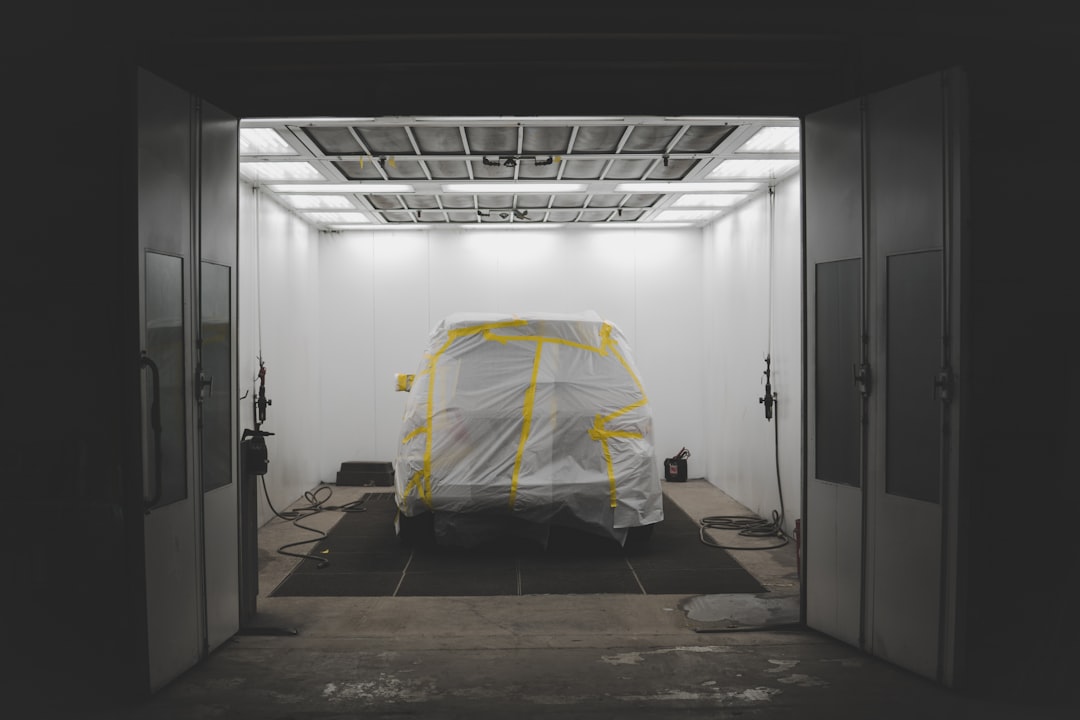
Google Ads Strategy for Auto Body Shops and Collision Repair Services
The auto body shop and collision repair industry faces unprecedented challenges in 2024. Insurance companies are increasingly directing customers to preferred repair networks, customer acquisition costs continue to rise, and local search competition has never been fiercer. Body shops that once relied on insurance referrals and walk-in traffic now find themselves competing in a digital-first marketplace where visibility on Google can make or break their revenue.
The Collision Repair Market Reality
According to the National Association of Collision Repair and Refinish Professionals (NACRP), over 78% of customers searching for collision repair services begin their journey on Google. This statistic alone underscores why a strategic Google Ads approach isn’t optional—it’s essential for survival. Yet many body shops continue to treat digital advertising as an afterthought, missing critical revenue opportunities during peak seasons when customer demand is highest.
The challenge intensifies when you consider that collision events are unpredictable. A customer involved in an accident doesn’t have time to research ten different repair shops. They want immediate, relevant results that address their specific needs: quality repairs, insurance approval, quick turnaround, and fair pricing. Google Ads positions your shop directly in front of these high-intent customers at the exact moment they need you.
Keyword Strategy for Body Shops
The foundation of any successful Google Ads campaign begins with intelligent keyword selection. For collision repair, this extends beyond obvious terms like “auto body shop near me.” Smart body shops target a mix of keyword types:
Accident-Related Keywords: “Hit and run damage repair,” “accident injury and repair,” and “emergency car damage” capture customers in crisis mode. These searches indicate immediate need and higher conversion likelihood.
Insurance-Related Keywords: “Insurance approved body shop,” “direct repair program,” and “works with all insurance” address the primary concern for most accident victims. In fact, 65% of collision repair customers prioritize insurance compatibility above all else.
Brand-Defensive Keywords: Bidding on competitor shop names prevents customers from automatically defaulting to larger chains. A customer searching for a specific competitor’s shop is already in buying mode—this is your last chance to present your shop as a superior alternative.
Local Modifiers: “Collision repair in [city name]” and “certified body shop in [neighborhood]” ensure you capture geographically relevant traffic. Local searches consistently convert better than broad geographic targeting.
Campaign Structure and Ad Copy
Successful Google Ads campaigns for body shops require careful structural organization. Rather than one generic campaign, create separate campaigns for different customer segments: accident victims, referral network customers, customers with specific damage types, and insurance claimants. This segmentation allows for tailored messaging and budget allocation based on actual performance data.
Your ad copy must address the anxieties accident victims experience. Don’t lead with “expert technicians”—everyone claims that. Instead, lead with “Direct insurance billing available,” “Same-day estimates,” or “Loaner vehicles provided.” These are concrete benefits that reduce friction in the decision-making process.
Extension usage is critical yet often overlooked. Call extensions, location extensions, and promotion extensions can increase your click-through rate by 15-20%. Include specific promotions like “Free rental car with major repairs” or “Certified by [insurance company].” These extensions provide the additional information customers need to choose you over competitors.
Landing Page Optimization
Many body shops direct Google Ads traffic to their homepage. This is a missed opportunity. Each ad group should direct to a specific landing page that matches the ad’s promise. A customer responding to an “emergency accident repairs” ad should land on a page emphasizing quick turnaround, not a generic services page.
Effective landing pages for body shops include clear CTAs (“Get Free Estimate,” “Schedule Inspection”), proof elements (certifications, customer testimonials, before-and-after galleries), and trust signals (years in business, warranty information, insurance affiliations). Mobile optimization is non-negotiable—over 72% of collision repair searches occur on mobile devices.
Measuring What Matters
Set up proper conversion tracking beyond clicks and impressions. Track phone calls, form submissions, and even estimate requests. Many body shops focus exclusively on cost-per-click while ignoring cost-per-job, which is the actual metric that determines ROI. A campaign with higher CPC but better qualified leads is superior to cheaper clicks that don’t convert.
For deeper insights into optimizing your digital marketing efforts, explore resources that combine data-driven strategies with industry expertise. Smartli.co offers comprehensive tools for managing and analyzing advertising performance across platforms.
Seasonal and Competitive Considerations
Body shop demand fluctuates seasonally. Winter months typically see increased accident claims due to weather conditions. Successful shops adjust their Google Ads budgets accordingly, increasing spend during predictable high-demand periods and maintaining baseline presence during slower seasons.
The collision repair space continues evolving. Shops that treat Google Ads as a strategic advantage rather than a grudge purchase will capture disproportionate market share from competitors who haven’t adapted to the digital-first landscape.